
Inflation changes everything.
Investment portfolios can be affected by inflation in three crucial ways:
1) Portfolio Correlations
2) Real Returns
3) Sector Outlooks
It is important to have a game plan for investing during periods of inflation.
Portfolio Correlations
Portfolio diversification is weakened (gold line) if stocks and bonds move together. Inflation can cause stocks and bonds to be correlated (~80%) or uncorrelated (~80%) for quite long stretches of time.
Correlation of bond and equity return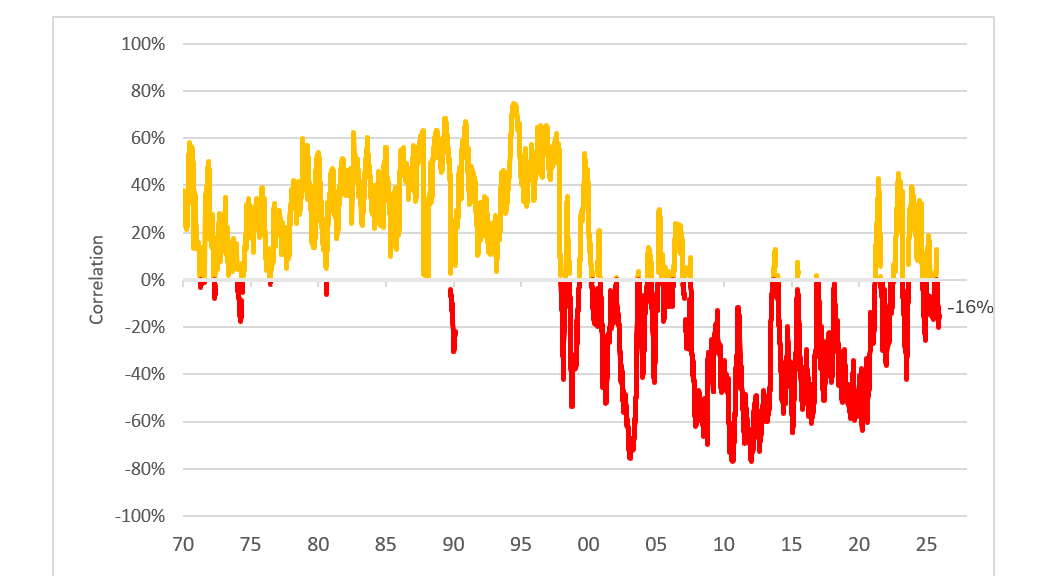
Source: LSEG Datastream, chart by BlackRock Investment Institute, Nov 25, 2025. Notes: the line shows the correlation of daily U.S. 10y Treasury returns and S&P 500 over a rolling 90-day period.
Since inflation threatens stock-bond portfolio diversification, portfolios can benefit from strategies that incorporate alternative diversifiers.
Real Returns
Different assets respond differently to inflation. Bond yields are fixed and so the after-inflation return on a bond (real return) is directly affected by inflation – see chart below for recent real bond yields.
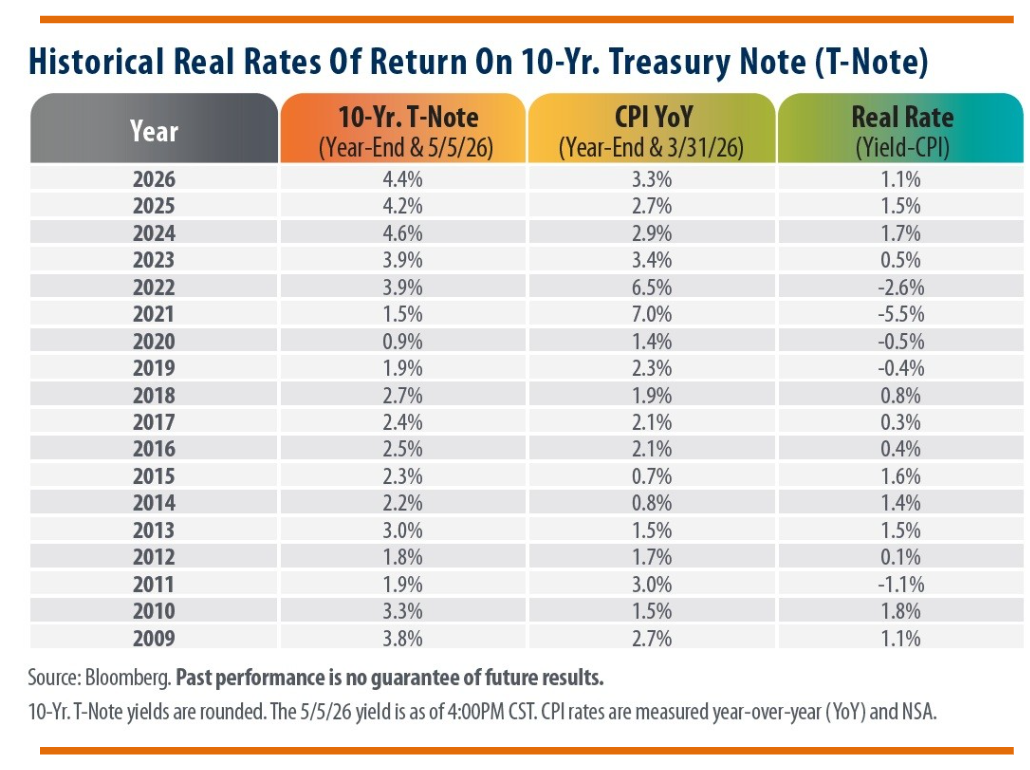
Since Inflation threatens real returns, portfolios benefit from the ability to adjust to assets that are less sensitive to inflation.
Sector Dynamics
Historically, certainsectors perform differently in an inflationary environment. Parts of the economy can benefit from rising prices as some sectors can have a relatively easier time during this part of the market cycle.
Rising inflation would support a value shift
Sector relative returns in rising inflation regimesSource: Ned Davis Research. Based on data from Bloomberg Barclays Indices, S&P Down Jones Indices, and United States Bureau of Labor Statistics. Regimes based on CPI. Analysis data: 7/31/1972 to 4/30/2026.
Since different sectors are affected differently by price changes, active managers can weight their portfolios towards business which are more likely to benefit.
Portfolio Management for All Seasons
Professional money management takes into account changing market realities and provides the flexibility and the tools necessary to adapt when change is required.
That’s why our “pension-style” portfolios are designed to be flexible. We incorporate many strategies that allow portfolios to dynamically adapt to changing market conditions over market cycles.
For more information how our portfolios are designed for all market cycles, please take a moment to view our portfolio page and give us a call to discuss.
