
Taxes can significantly lower your net investment returns.
Unfortunately, the cumulative costs can be huge.
Fortunately, keeping more of what you earn is possible.
This “tax-drag” problem (and potential solutions) becomes clear with three simple illustrations:
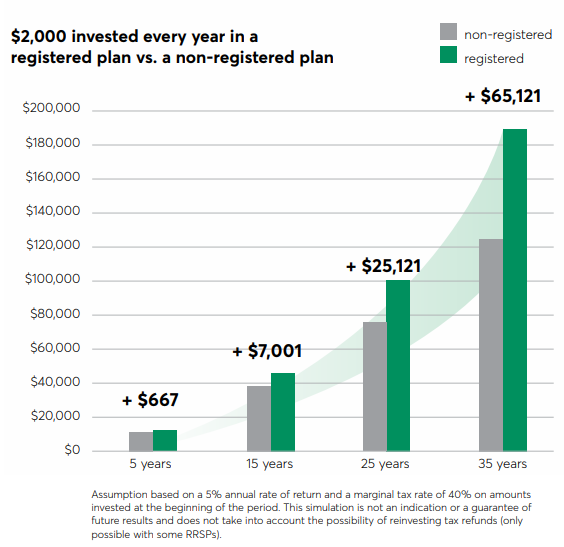
- How much higher can your investments grow?
Source: Lifecare Insurance and Financial Experts Inc.
A “registered” account allows your money to compound without taxes. Reinvesting gains without paying taxes on a yearly $2,000 investment grows $65,000more than with gains taxed annually, over 35 years.
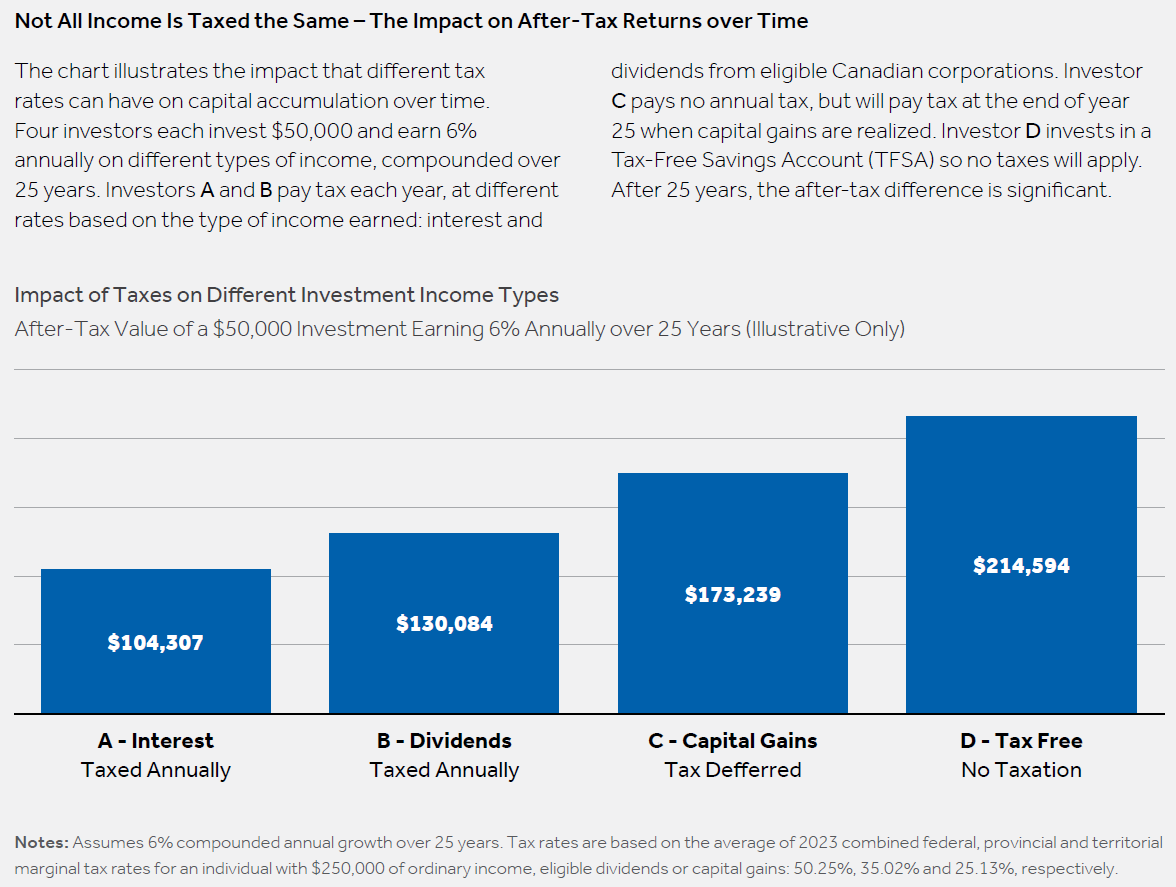
- How much of your money do you keep?
Source: Canaccord Genuity
Here we see side-by-side how much money is left in your pocket, receiving income from an equal investment in (1) interest income, (2) capital gains, (3) a tax-deferred account (RRSP), and (4) a tax-free account (TFSA) after 25 years. The type of account and also the type of income received in a taxable account can make an enormous difference.
- How does a TFSA compare to Capital Gains?
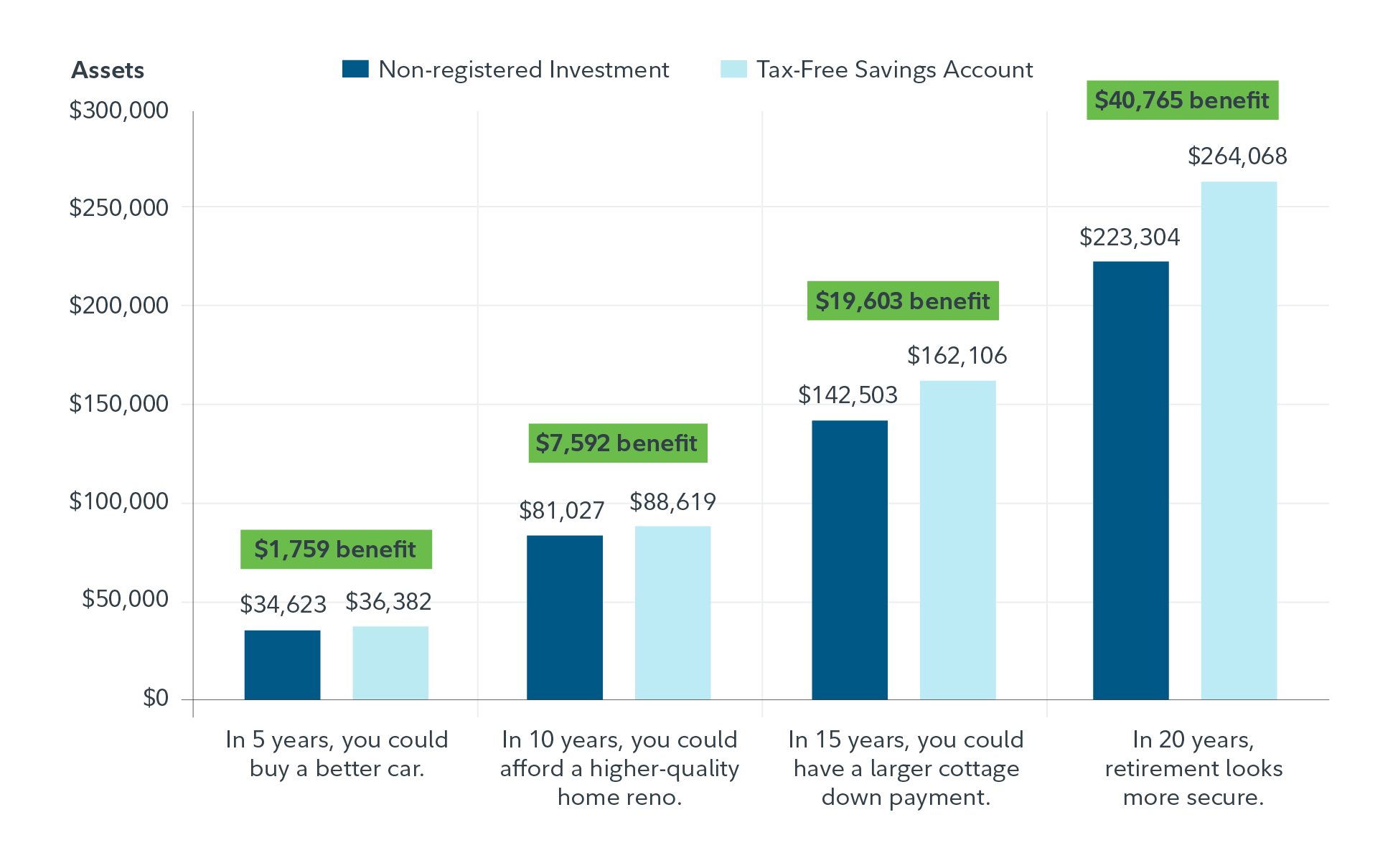
Assumptions: Rate of return of 6%, marginal tax rate of 50% for interest and 25% for capital gains, distributions reinvested, distribution yield of 2.0%, distribution composed of 50% interest and 50% capital gain, initial contribution of $6,000 and contributions increase in $500 increments based on a 2% inflation rate. Contributions were made at the beginning of the period. Unrealized capital gains were taxed at the end of the holding period. This assumption ignores contributions from prior years. Source: Fidelity Investments Canada
We recommend that people consider maximizing their Tax-Free Savings Account if they can. They shelter all taxes, including capital gains (see above). They avoid probate taxes with “named beneficiaries” and the income received from a TFSA also does not affect OAS benefits.
Call us to review how you can avoid being dragged down by taxes and keep more of what you earn!
We are happy to work with you and your tax advisor to help you find personalized solutions.
Your CommonWealth Team
